Charged Above 16% APR? Title Loans for New Yorkers Are Void

No, title loans are effectively illegal in New York because their typical interest rates violate the state’s usury law under General Obligations Law §5-511, and the Department of Financial Services treats these loans as void. If you were offered one, the loan itself may carry no legal weight, but you still need to know what that means for your car, your credit, and your money.
TL;DR:
- Title loans with interest rates exceeding 16% are illegal in New York and can be considered void from the outset under state law.
- Lenders charging above 25% APR commit criminal usury, risking felony charges, and online or out-of-state lenders cannot escape these limits when offering loans to New York residents.
- Even if a title loan is void, lenders may still threaten repossession or lien recording, so documenting all communication and payment records is crucial.
- Spotting red flags like triple-digit rates, pressure to surrender your vehicle title immediately, or claims of exemption from laws can help identify illegal lending schemes.
- Legal alternatives include small-dollar loans from credit unions or hardship plans, which avoid the risks associated with unlicensed or usurious title lending.
Table of Contents
- Why title loans are unlawful in New York: the statutes and how usury caps work
- Regulatory stance and enforcement: what DFS, the NY Attorney General, and federal agencies say
- Practical consequences for borrowers: void contracts, repossession, liens, and recovery options
- How to spot illegal title-loan schemes and where to report them
- Safer, legal alternatives for New York residents who need short-term cash
- What I’d tell a friend facing one of these offers
- How Cash Title Express can help
- Sources
- FAQ
Why title loans are unlawful in New York: the statutes and how usury caps work
New York caps how much interest a lender can charge on most consumer loans. Under General Obligations Law §5-501, the civil usury limit sits at 16% APR for loans under $250,000, and General Obligations Law §5-511 states that any loan written above that rate is void from the start, not just unenforceable in part.

There is a second, harsher layer above the civil cap. New York’s Penal Law treats interest above 25% APR as criminal usury, and a lender who knowingly charges that much can face felony exposure, according to DFS’s Online Lending Report. Most title loan products advertised nationally have very high interest rates exceeding criminal usury limits, which places them squarely in criminal territory rather than a gray area.
None of these exceptions were built for short-term consumer lending secured by a car title. A title lender cannot borrow a bank’s rate-export privilege just by partnering loosely with an out-of-state bank, and DFS has made clear that consumer-facing high-cost lending aimed at New York residents does not escape the usury caps through structuring. The practical result is that the loan product most Americans think of as a “title loan” simply has no lawful path to exist in New York the way it does in states like Texas or Nevada.
Regulatory stance and enforcement: what DFS, the NY Attorney General, and federal agencies say
New York regulators have not stayed quiet on this. DFS’s Online Lending Report documents the state’s position directly: high-cost payday and title lending is illegal here, and the agency has issued warnings and pursued lenders who try to reach New York consumers anyway. The New York Attorney General’s payday loan guidance echoes that stance, calling out online and out-of-state lenders that market these products to residents despite the usury caps.
Federal regulators have also acted against title lenders, though not specifically for New York violations. The CFPB’s order against TitleMax penalized the company for unlawful lending practices and overcharging military families, a case that shows federal enforcement treats abusive title lending as a real target, not a theoretical risk.
The core message from every one of these sources is consistent: a lender’s location does not change which state’s law applies. If a company lends to someone living in New York, New York’s usury caps govern that transaction regardless of where the lender is headquartered or what its website claims. Online lenders sometimes suggest that operating remotely places them outside state jurisdiction. Regulators reject that argument, and DFS has specifically flagged online payday and title lenders as a category it monitors and pursues when they target New York residents.

Practical consequences for borrowers: void contracts, repossession, liens, and recovery options
“Void from inception” is a specific legal outcome, not a general warning. Under GOL §5-511, a usurious loan is treated as if it never had legal force. That means a lender generally cannot enforce repayment of principal or interest through the courts, and a borrower who already paid may have grounds to recover those payments under GOL §5-513, according to analysis of the statute.
That legal reality does not always stop a lender from acting like the loan is valid. Some lenders still attempt repossession or threaten to record a lien even when the underlying contract has no legal footing. If that happens to you, document everything: loan paperwork, payment records, any communication from the lender, and the interest rate charged. The NY DMV’s lien procedures require specific documentation and a fee to record a lien properly, so a lender who never followed that process may have no valid claim on your title at all.
If you believe your loan is usurious, do not assume you can simply stop paying without consequence. Talk to a consumer attorney or a legal aid organization before you act, since the specifics of your paperwork matter. In parallel, file complaints with DFS and the New York Attorney General so regulators have a record of the lender’s conduct.
How to spot illegal title-loan schemes and where to report them
Illegal title lenders tend to share a few habits. Watch for these signs:
- Advertised rates in the triple digits, sometimes disguised as fees rather than stated APR.
- Pressure to hand over your vehicle title immediately, before you see full written terms.
- Claims that a lien is already filed or “in process” without any DMV paperwork to back it up.
- Messaging that says the lender is exempt from New York rules because it operates online or out of state.
That last point deserves emphasis: being online or headquartered elsewhere does not exempt a lender from New York’s usury law when it lends to a New York resident, a position both DFS and the Attorney General have reinforced repeatedly.
If you spot these red flags, report them. File a complaint with DFS through its consumer lending resources, contact the New York Attorney General’s office, and submit reports to the CFPB and FTC, since both track patterns across states even when they cannot act on a single loan alone.
Pro Tip: Before signing anything, ask the lender to state the APR in writing. A refusal to answer clearly is itself a red flag.
Safer, legal alternatives for New York residents who need short-term cash
You still need options when cash is tight, and New York has several that stay inside the law; for trustworthy advice on consumer finance, visit BFIL’s resources. Credit unions frequently offer small-dollar installment loans with rates far below anything a title lender would advertise, and many post their rates publicly before you apply.
A few starting points:
- Ask a local credit union about small-dollar or payday-alternative loan programs designed for short-term needs.
- Check whether your city or county runs an emergency assistance fund for rent, utilities, or urgent expenses.
- Request a hardship plan directly from a creditor you already owe money to, since many will adjust terms before sending an account to collections.
- Compare any loan offer using APR, not just the monthly payment, since the FTC’s guidance on payday and title loans explains that APR captures the full finance charge in a way a simple payment amount does not.
None of these require putting your car title at risk, which matters most if you rely on that vehicle for work or family responsibilities.
What I’d tell a friend facing one of these offers
If a friend showed me a title loan offer in New York, I’d tell them the math rarely works out.
Document the offer, report it if it looks predatory, and lean on credit unions or hardship plans before signing anything tied to your car. Where title lending is lawful, working with licensed lenders under clear written terms is a very different experience.
— Constantine
How Cash Title Express can help
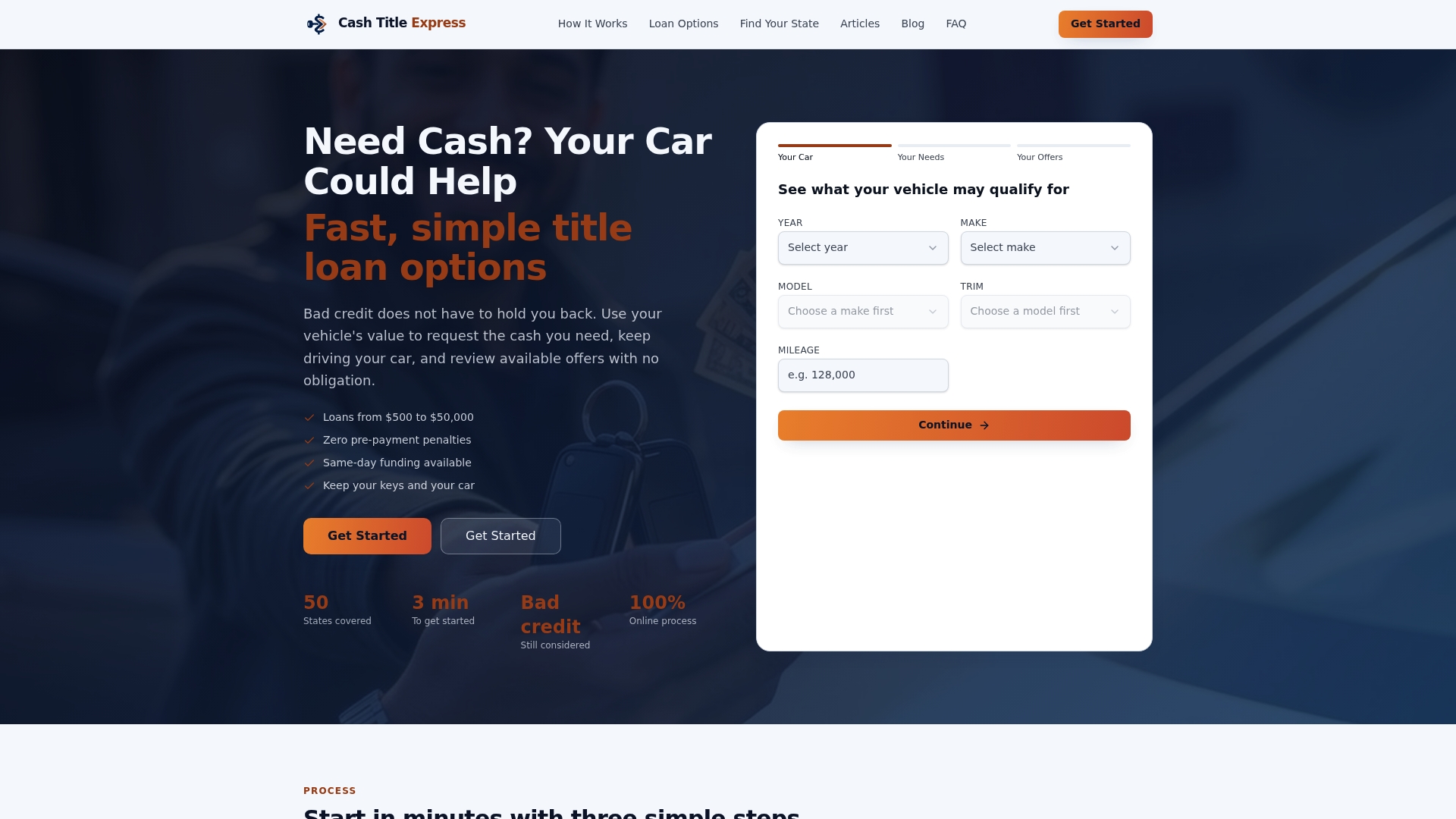
The legal analysis above applies specifically to New York, where high-cost title lending runs into the state’s usury caps. In states where title lending is lawful, Cash Title Express connects car owners with bad credit to licensed lenders through a fully online title-loan process that lets you keep driving your car while you borrow against its value.
A few features set this apart from a typical storefront lender:
- Written loan terms with no obligation to accept before you decide.
- No pre-payment penalties if you pay off the loan early.
- Licensed lenders matched to state-specific requirements, not a one-size-fits-all rate.
If you live in a state where title lending is permitted and want to see what a transparent offer looks like, start with the car title loan requirements page to check what documentation you will need, or visit Cash Title Express to see current state availability.
This article is general information, not a substitute for advice from a qualified financial advisor. Consult a qualified financial professional about your own circumstances before acting on anything here.
Sources
- NYS Department of Financial Services: Online Lending Report (July 2018)
- New York State Senate: General Obligations Law §5-501
- FTC: What to know about payday and car title loans
- NY DMV: Add or remove a lienholder
FAQ
What states allow title loans?
Title loan legality varies by state, and many states, including Texas, Nevada, and South Carolina, permit them under state-specific rate and term rules. New York does not permit high-cost title loans because they exceed the state’s usury caps under General Obligations Law §5-511.
How to legally get out of a title loan?
If your title loan was written above New York’s usury cap, it may be void under GOL §5-511, and you may be able to recover payments already made under GOL §5-513, according to legal analysis of the statute. Speak with a consumer attorney before stopping payments, since the right path depends on your specific paperwork.
What disqualifies you from getting a title loan?
Lenders generally require a clear vehicle title, proof you own the car, and enough equity in the vehicle to cover the loan amount, so a lien already on the title or insufficient equity can disqualify an applicant. In New York, the loan structure itself is disqualified from legal enforcement if its rate exceeds the state’s usury limits.
What happens if you never pay a title loan back?
In states where title loans are lawful, failing to repay can lead to repossession of the vehicle under the loan’s lien terms. In New York, a lender attempting repossession on a usurious loan may lack a valid legal basis to do so, though borrowers should still document the dispute and contact DFS or the Attorney General rather than assume the issue resolves itself.