
36% Cap: Why Military Title Loans Cost Service Members Too Much
Title loans are high risk for most military families, and the fees stack up faster than a standard personal loan ever would. Before you sign anything, check your Military Lending Act status through the DMDC verification system and call a legal assistance office or credit union first. If you still decide a title loan is the right move, a title loan service offers a transparent, fully online path with written terms and no obligation to accept.
TL;DR:
- Title loans often have effective interest rates in the high double digits or more due to rollover fees, risking rapidly escalating costs.
- Federal protections like the Military Lending Act do not cover purchase-money auto loans or loans taken before active duty, making many title loans outside its scope.
- Repossession and deficiency judgments vary significantly by state, affecting how much borrowers owe if their vehicle is sold for less than the loan balance.
- Lower-cost options such as military credit unions, emergency grants, and negotiating payment plans should be exhausted before considering a title loan.
- Verifying your Military Lending Act status with the DMDC tool and reviewing written loan terms can prevent overcharges and unlawful practices.
Table of Contents
- How Military Title Loans Work: Terms, Fees, and Repossession
- What Federal Protections Cover You (and What They Don’t)
- Why Title Loans Hit Military Borrowers Harder
- Lower-Cost Alternatives Worth Trying First
- How to Vet a Title Loan Offer Before You Sign
- How Cash Title Express Handles the Process Online
- A Service-Member-First Take on Title Loans
- Ready to Apply? Here’s How Cash Title Express Starts the Process
- Where to Verify Protections and File Complaints
- Sources
- FAQ
How Military Title Loans Work: Terms, Fees, and Repossession
A vehicle title loan is a short-term loan secured by your car’s title, typically ranging up to tens of thousands of dollars depending on the lender and your vehicle’s value. Lenders charge a monthly fee, often a flat percentage of the amount borrowed, and if you can’t repay in full you “roll over” the balance into a new term, adding another round of fees on top of what you already owe.

That rollover cycle is where costs spiral. A loan that looks like a manageable monthly fee can translate into an effective APR well into triple digits once you’ve rolled it two or three times, according to advocacy summaries from Military Transition Toolkit, which also notes that title lenders tend to cluster near military installations.
Repossession terms vary by state, and so does your exposure if the lender sells your car for less than you owe:
- Some states allow lenders to pursue a deficiency judgment for the shortfall after resale.
- Others cap fees or ban rollovers outright, which changes the real cost dramatically.
- A handful of states don’t license title lending at all, so the terms you’d see depend entirely on where you’re stationed or where the loan is originated.
Check your specific state’s rules before signing, since state-by-state loan terms differ enough to change the entire calculation.
What Federal Protections Cover You (and What They Don’t)
The Military Lending Act caps the Military Annual Percentage Rate at 36% for “covered borrowers,” which generally means active-duty service members and their dependents. That cap folds in nearly every fee, not just interest, which is why it matters so much for title loans specifically.
But MLA has real gaps. It excludes purchase-money auto loans (financing used to buy the car itself), and coverage can hinge on whether you were already on active duty when you took the loan, according to Army-hosted guidance on the MLA. A title loan against a car you already own, taken while you’re on orders, generally falls under MLA. A car loan used to purchase the vehicle usually doesn’t.
Here’s your verification checklist:
- Confirm covered-borrower status through the DMDC MLA verification tool before signing anything.
- If a lender refuses to run the MLA check or hides your status, that’s a red flag worth reporting.
- Contact your installation’s legal assistance office or JAG if you’re unsure how your situation fits.
Statistic to know: the CFPB’s own auto-lending research found servicemembers routinely face higher APRs and longer loan terms than civilian borrowers, even though repossession rates in that dataset were lower. Higher cost doesn’t always show up as higher default risk. Sometimes it just shows up as years of extra payments.
The Servicemembers Civil Relief Act works differently. It doesn’t cap rates the way MLA does, but it can reduce interest on pre-service debts to 6% and offers protections tied to deployment or a permanent change of station, including delayed enforcement actions while you’re unavailable to respond.
Why Title Loans Hit Military Borrowers Harder
The Consumer Financial Protection Bureau isn’t speculating about this risk. It’s documented it. In one case, the CFPB ordered TitleMax to pay a multimillion-dollar penalty for extending prohibited title loans to covered borrowers and concealing evidence of their military status to dodge MLA’s rate cap.
The consequences reach beyond your wallet:
- Losing your vehicle can jeopardize your ability to meet duty station requirements, disrupting reporting schedules that matter for your record.
- Financial distress from a debt spiral is a factor security-clearance reviewers can weigh, since unpaid debt sometimes surfaces during adjudication.
- Local news has reported lenders refusing to accept valid payoff attempts, including one case involving a hospitalized veteran who couldn’t redeem his own vehicle.
The pattern is predictable: an emergency expense turns into a short-term loan, the loan rolls over once or twice, and within a few months the borrower owes more than the car is worth. That’s usually when repossession risk peaks, not at the moment the loan is signed.
Lower-Cost Alternatives Worth Trying First
Before you put your car title on the line, a few resources exist specifically because military and veteran families hit cash crunches more often than most:
- Emergency relief organizations like the Disabled American Veterans, VFW, and American Legion offer grants or interest-free loans for exactly this kind of gap, and VA emergency financial programs exist for eligible veterans.
- Military-friendly credit unions and lenders, including Navy Federal, PenFed, and USAA, generally offer personal or auto loans at far lower rates than any title lender will quote you.
- Direct negotiation with the creditor you’re trying to pay, whether that’s a landlord, a utility company, or a medical provider, often gets you a payment plan with zero interest.
- Base family support centers and county veterans service offices can point you toward local aid you likely don’t know exists.
These options don’t recover collateral, and one of them is worth a phone call before you ever contact a title lender.
How to Vet a Title Loan Offer Before You Sign
If you’ve exhausted the alternatives and a title loan is genuinely your best option, run the offer through a real checklist instead of trusting the sales pitch.
- Confirm your MLA status first, every time, regardless of what the lender claims.
- Insist on a written offer that spells out the fee structure, not just a verbal quote.
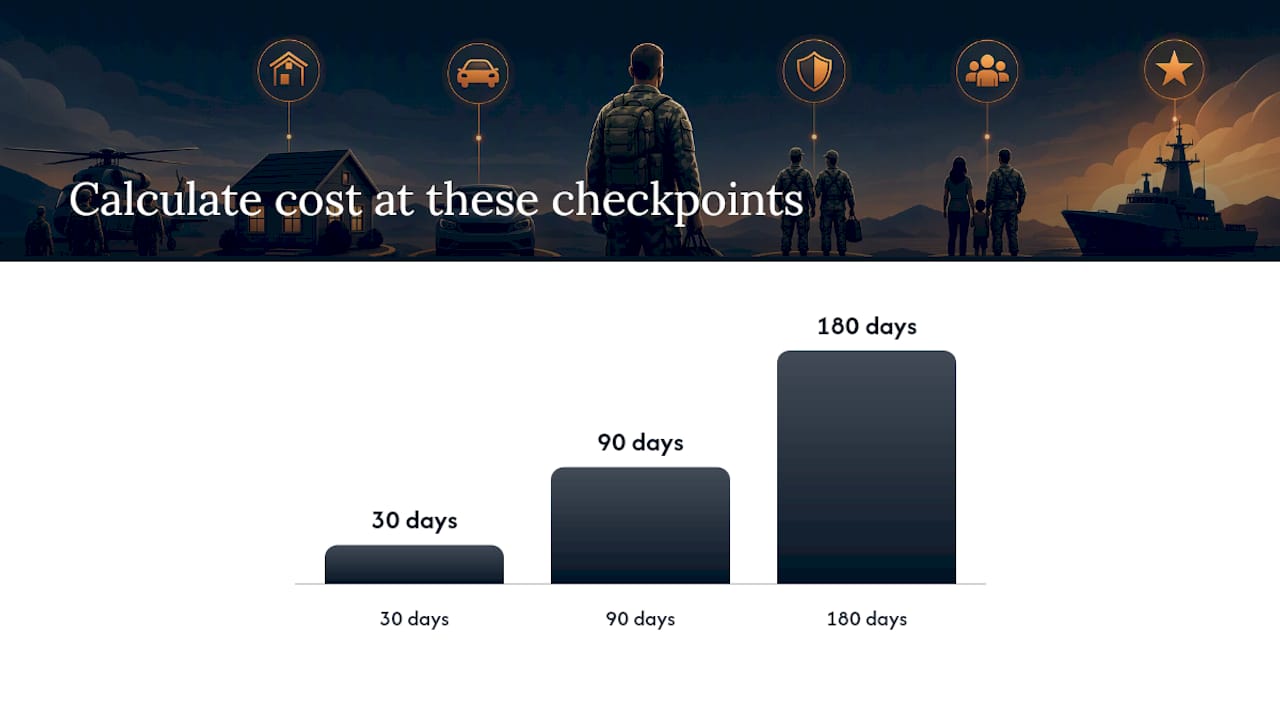
- Calculate your total cost at 30, 90, and 180 days assuming at least one rollover. A loan cost calculator makes this fast.
- Confirm your state’s repossession and deficiency-judgment rules before you sign, not after.
Walk away if you see any of these:
- Fees that aren’t disclosed in writing before signing.
- A lender that won’t verify or won’t ask about MLA status.
- Mandatory arbitration clauses that strip your right to sue.
- Automatic payroll or allotment deductions built into the loan terms.
Pro Tip: Ask the lender directly, “Will you run my MLA status through the DMDC tool before we finalize this?” A lender that hesitates or dodges the question is telling you everything you need to know.
If you believe you’ve been charged illegally or targeted because of your service, file a complaint with the CFPB, contact your JAG office, or reach out to your state attorney general’s consumer protection division.
How Cash Title Express Handles the Process Online
If you’ve verified your MLA status, ruled out lower-cost alternatives, and still need fast cash, The entire loan process can be completed online rather than through a storefront. Loan amounts range widely, funding can occur quickly, and there are no prepayment penalties if you pay the loan off early.
The flow works like this:
- Customers submit basic vehicle and ID information for prequalification.
- They receive a written offer with no obligation to accept it, allowing comparison with other loan quotes before deciding.
- Once accepted, licensed lenders matched to state-specific requirements handle funding, and borrowers keep driving their car during the loan term.
You can review the full step-by-step process or browse the article library for state-specific rules before you apply. Keep every document, and double check your state’s terms regardless of what any lender tells you.
A Service-Member-First Take on Title Loans
The advice here isn’t complicated, and it doesn’t change based on your branch or rank: verify your MLA status before you talk to any lender, exhaust the low-cost options first, and read every line of a written offer before you sign it. Your vehicle isn’t just collateral. It’s how you get to formation, to drill, to a hospital appointment for your kid. Protect it accordingly.
— Constantine
Ready to Apply? Here’s How Cash Title Express Starts the Process
If you’ve checked your MLA status, called your credit union, and a title loan still makes sense for your situation, this service provides a way to apply entirely online without visiting a storefront or surrendering your vehicle. Applicants review a written offer before any obligation.
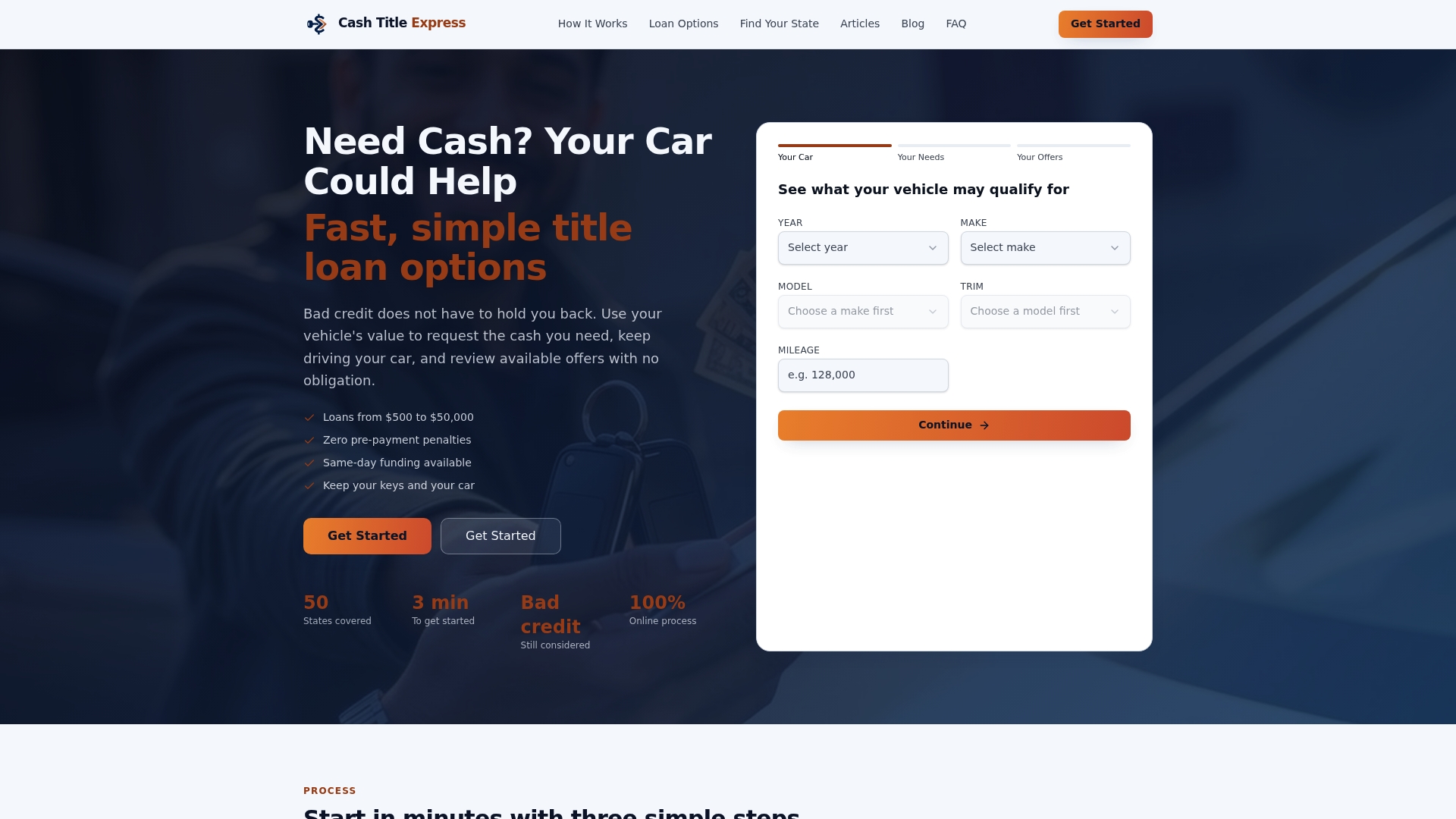
Start with online car title loans to see prequalification terms, or check what documents you’ll need if you have limited credit history and want to know what counts toward approval. Every offer comes with no obligation, so you can compare it side by side with a credit union quote before committing to anything. Same-day funding is available once you accept, and licensed lenders are matched to your state’s specific rules, not a one-size-fits-all national rate.
Keep copies of everything you sign, and if a lender ever pressures you to skip the MLA verification step, that’s your signal to walk. Ready to see your numbers? Check your rate with no obligation to accept.
Where to Verify Protections and File Complaints
Use the DMDC MLA tool to confirm covered-borrower status, the CFPB to file a complaint, and your state attorney general’s office to check local title-loan caps before signing anything.
This article is general information, not a substitute for advice from a qualified financial advisor. Consult a qualified financial professional about your own circumstances before acting on anything here.
Sources
- CFPB Orders TitleMax to Pay a $10 Million Penalty for Unlawful Title Loans and Overcharging Military Families
- Auto Lending to Service Members (CFPB report)
- DMDC MLA user guide
- Title Loans and Service Members: Why the Risk Isn’t Worth It (Military Transition Toolkit)
FAQ
Are military title loans covered under the Military Lending Act?
Many are, but coverage depends on timing and loan structure. If you’re on active duty and the loan uses a title you already hold (not a purchase-money auto loan), it typically falls under MLA’s 36% MAPR cap.
How do I check if I’m a covered borrower under MLA?
Use the official DMDC MLA verification system before signing any loan agreement. Any lender you’re working with should be running this same check on their end.
What’s the difference between MLA and SCRA protections?
MLA caps the total cost of covered loans at a 36% Military Annual Percentage Rate for active-duty borrowers and dependents. SCRA instead reduces interest on pre-service debts to 6% and adds protections tied to deployment and PCS orders, but it doesn’t set a universal rate cap.
Does Cash Title Express check for MLA eligibility?
Cash Title Express works with licensed lenders matched to your state’s requirements, and confirming your MLA status is a step you should take through the DMDC tool before accepting any written offer. Pricing and terms aren’t published as flat rates since they depend on your vehicle, state, and lender match, though every offer comes with no obligation to accept.
What happens if I can’t repay a title loan on time?
Most lenders offer a rollover, which extends the loan but adds another round of fees on top of your existing balance. If you default entirely, the lender can repossess your vehicle, and depending on your state, you may still owe a deficiency judgment if the resale doesn’t cover the balance.
Are there better alternatives to title loans for veterans?
Military-friendly credit unions like Navy Federal, PenFed, and USAA typically offer lower-rate personal or auto loans than any title lender. Veteran service organizations such as DAV, VFW, and the American Legion also provide emergency grants for members facing a short-term cash gap.