
Get a Rebuilt Title Loan in the U.S.: Where to Apply and What to Bring
Yes, you can finance a rebuilt-title vehicle, but the list of lenders willing to say yes is short, and the terms are tighter than what a clean title gets. Start with a credit union or community bank, since they’re the most likely to approve a manual review, and have your appraisal, repair receipts, and insurance quote ready before you apply. Expect a lower loan-to-value cap, a shorter repayment term, and a higher rate than you’d get on a comparable clean-title car.
TL;DR:
- Loan-to-value caps on rebuilt-title loans typically range from 60 to 80 percent of the car’s appraised value, limiting borrowing amounts significantly.
- Shorter repayment terms of 36 to 48 months and higher interest rates in the low-to-mid teens make rebuilding-title loans more expensive overall.
- Manual review at credit unions or community banks offers the best chance of approval; automated systems at large banks usually reject rebuilt titles outright.
- Insurance coverage must include comprehensive and collision policies, which are often limited or denied for rebuilt titles, complicating loan approval.
- A thorough preparation of appraisal, repair receipts, and insurance quotes can prevent application rejection and improve chances of secured financing.
Table of Contents
- What “Rebuilt” Means and Why It Changes the Loan
- Where to Try First: Lender Types Most Likely to Say Yes
- What a Rebuilt-Title Loan Actually Costs
- Your Application Checklist: Get This Ready Before You Apply
- Title Loans, Real Risks, and Cheaper Ways to Get Cash
- How Cash Title Express Fits Into This Picture
- Ready to Check Your Options? Here’s Where to Start
- Where to Verify the Rules in Your State
- Sources
- FAQ
- The Real Gap Between What Rebuilt-Title Owners Expect and What Lenders Actually Offer
What “Rebuilt” Means and Why It Changes the Loan
A salvage title gets issued when an insurer declares a vehicle a total loss, usually because repair costs exceed a set percentage of its value. Once someone repairs that car and it passes a state inspection, the title gets rebranded as “rebuilt” or “reconstructed,” and the vehicle becomes legal to drive and register again. A clean title, by contrast, has never carried either brand.
That distinction follows the car for as long as you own it. Resale value on a rebuilt-title vehicle typically runs 20 to 40 percent below what an identical clean-title car would fetch, and that discount is baked into how lenders view the collateral. A rebuilt brand doesn’t just spook buyers. It spooks underwriters, because if you default, the lender is stuck reselling a car nobody wants to pay full price for.
Manufacturer warranties almost always die the moment a title gets branded salvage, and most third-party warranty providers won’t touch a rebuilt car either. That leaves you with three practical consequences worth knowing before you shop for financing:
- Automated underwriting systems at large banks tend to flag and reject rebuilt titles automatically, regardless of your credit score.
- The vehicle’s post-repair value, not its pre-accident value, sets the ceiling for any loan amount.
- Insurance carriers may limit or deny full coverage, which matters because most secured lenders require it.
Where to Try First: Lender Types Most Likely to Say Yes
Not every lender treats a rebuilt title the same way, and knowing the order to approach them saves you time and unnecessary credit inquiries.
- Credit unions and community banks. These are your best shot, especially if you already have an account or loan history with one. Loan officers at smaller institutions often handle rebuilt-title applications through manual underwriting rather than an automated decline, meaning a human actually looks at your appraisal and repair documentation instead of a system rejecting it on sight.
- Specialty and subprime lenders. Some online and specialty auto lenders accept rebuilt titles as a matter of policy, but they price in the added risk with higher APRs. They’re a reasonable fallback if a credit union turns you down.
- Buy-here-pay-here dealers. These lots approve almost anyone, rebuilt title or not, because they’re financing the car themselves and holding the paper. That convenience comes at a steep cost, often the highest interest rate and shortest term of any option here, so treat it as a last resort.
- Unsecured personal loans. If your credit qualifies, a personal loan sidesteps the whole rebuilt-title problem since the lender isn’t securing the loan against the car. You’ll likely pay a competitive rate based on your credit profile instead of the vehicle’s history.
Pro Tip: Call or email a lender’s loan officer before you formally apply and ask directly whether they finance rebuilt titles. A five-minute phone call beats a hard credit pull that gets auto-declined and dings your score for nothing.
What a Rebuilt-Title Loan Actually Costs
Lenders that finance rebuilt-title vehicles almost always cap the loan-to-value ratio between 60 and 80 percent, compared to the 100 percent or higher LTV that’s common on clean-title used car loans. Say your rebuilt-title car appraises at $15,000. At a 70 percent LTV cap, the lender will finance around $10,500, and you’re covering the remaining $4,500 out of pocket or through a second financing source.
Repayment terms tend to max out at 36 to 48 months, noticeably shorter than the 60 to 72 month terms common on standard used-car loans. Shorter terms mean higher monthly payments, even at a comparable rate.
By the numbers: Rate ranges for rebuilt-title loans commonly land in the low-to-mid teens for many borrowers, with subprime lenders and buy-here-pay-here dealers pricing well above that depending on credit and vehicle condition.
A few other constraints show up consistently across lenders:
- Full coverage insurance, including comprehensive and collision, is usually mandatory before funding.
- Insurers sometimes cap payouts on rebuilt titles or decline to write comprehensive coverage at all, which can kill a loan even after approval.
- GAP insurance, which covers the gap between what you owe and what the car is worth after a total loss, is frequently unavailable on branded titles.
- Some lenders set hard limits on vehicle age or mileage regardless of the title brand, and nearly all require an independent appraisal before disbursing funds.
Your Application Checklist: Get This Ready Before You Apply
Assembling a complete file before you submit anything is the single biggest lever you control. Lenders willing to manually review a rebuilt-title application are looking for evidence that the risk is manageable, and a thin file gets rejected faster than a thorough one.
- Get a professional appraisal and a vehicle history report. Run the VIN through a history service and pay for an independent appraisal that compares your car to similar rebuilt-title sales, which typically runs $100 to $500 depending on your region.
- Collect repair receipts and the state inspection certificate. Every invoice for parts and labor, plus the mechanic’s certification and the state’s official rebuilt-title inspection paperwork, tells the underwriter exactly what got fixed.
- Line up insurance quotes showing full coverage. Get a binder or proof of comprehensive and collision coverage before you apply, since a lender will often stall or deny a loan without it.
- Prepare your personal financial documents. Recent pay stubs, proof of residence, and a valid ID round out the file.
Pro Tip: Get your insurance quote and appraisal locked in before you submit the loan application, not after. Applying first and scrambling for insurance later is the most common reason approved buyers lose their financing window.
Title Loans, Real Risks, and Cheaper Ways to Get Cash
If a rebuilt-title auto loan doesn’t pan out, a car title loan is one option, but it’s worth understanding the downside before you sign anything. The Consumer Financial Protection Bureau has found that roughly one in five title-loan borrowers ends up having their vehicle repossessed somewhere in the sequence of borrowing and rolling over the loan.
Title loans typically run 15 to 30 day terms with finance charges that compound into APRs reaching triple digits when annualized, and most lenders don’t report on-time payments to the credit bureaus, so the loan does little to help you rebuild credit even if you pay flawlessly.
Before committing to a secured title loan, weigh these lower-cost alternatives:
- Unsecured personal loans from a bank or online lender, especially if your credit qualifies for a mid-range rate.
- Credit union Payday Alternative Loans (PALs), which cap rates and fees far below typical title-loan pricing.
- A secured credit card, useful for smaller, ongoing cash needs rather than a lump sum.
- Borrowing from family, which carries no interest but requires a clear repayment agreement to avoid strain.
If a title loan ends up being your only realistic option, borrow only what you can repay within the first term, avoid rolling the loan over more than once, and keep copies of every document you sign. Cash Title Express’s bad credit approval guide walks through how approval typically works for borrowers in this exact situation.
How Cash Title Express Fits Into This Picture
If you’ve worked through the credit union and personal loan routes and a secured title loan makes sense for your situation, The service matches borrowers with lenders offering title loans based on the vehicle’s value and borrower information. The process operates online, and approved applicants can review written loan terms with no obligation before funding, which can happen the same day.
Borrowers typically keep driving their cars throughout the loan period without vehicle surrender, and the service claims no pre-payment penalties for early payoff. Before you start, pull together the same value packet a rebuilt-title auto lender would want: your title, proof of insurance, and income documentation. Having that ready before you apply is what separates a same-day decision from a stalled one.
Ready to Check Your Options? Here’s Where to Start
Before you submit anything, put together what amounts to a value packet: your vehicle title, proof of insurance, and recent income documentation. Cash Title Express’s car title loan requirements page breaks down exactly what to have on hand so you’re not scrambling mid-application.

The online process emphasizes speed without hidden fees. Applicants receive a written offer with no obligation, work with state-licensed lenders, and funding can occur the same day once approved. There is no vehicle surrender and no pre-payment penalty for early payoff, important if the vehicle is essential for daily transportation.
If a secured title loan looks like the right move after weighing the alternatives above, start with the online car title loan application and see what terms you’re offered. Reviewing the written offer costs you nothing, and you’re never locked in until you say yes.
Where to Verify the Rules in Your State
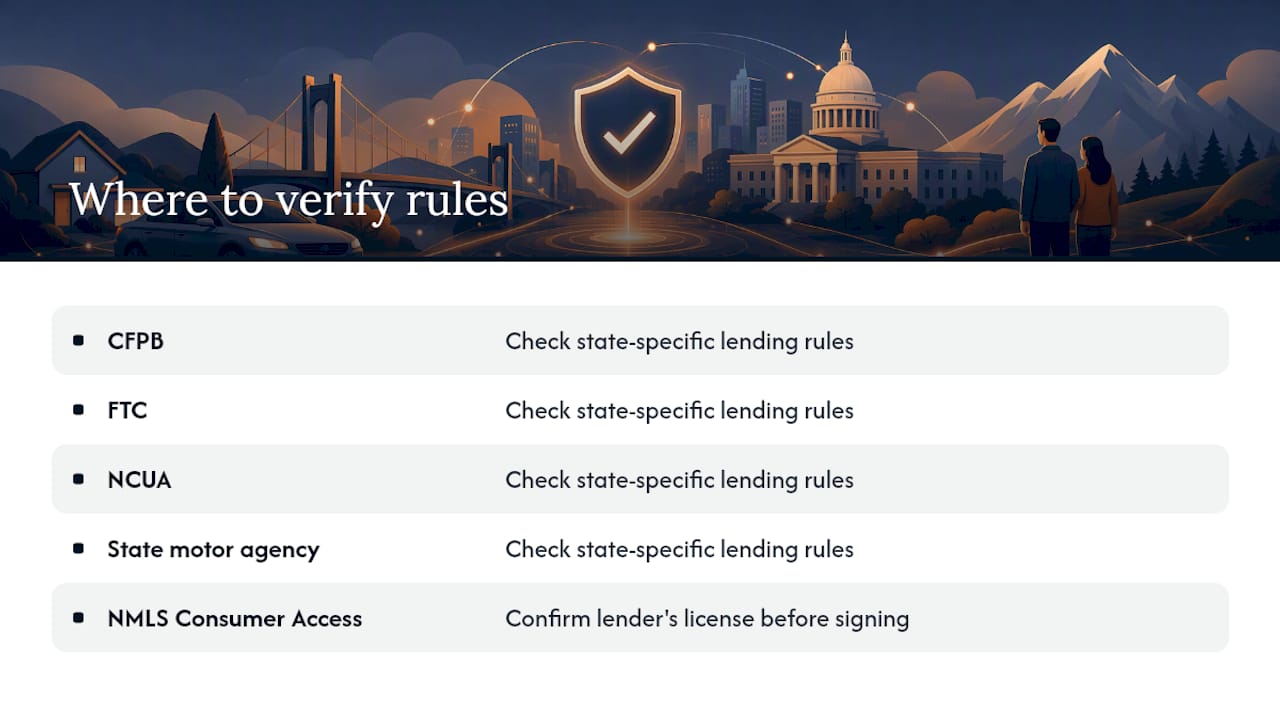
Check the Consumer Financial Protection Bureau, the FTC, NCUA, and your state’s motor vehicle agency for state-specific lending rules, and use NMLS Consumer Access to confirm any lender’s license before signing.
This article is general information, not a substitute for advice from a qualified financial advisor. Consult a qualified financial professional about your own circumstances before acting on anything here.
Sources
- How to finance a rebuilt vehicle safely and affordably (Revroom)
- How do title loans work? (Experian)
FAQ
Will Capital One Finance a Rebuilt Title?
Capital One’s auto financing program generally excludes salvage and rebuilt-title vehicles, following the pattern of most large national banks that rely on automated underwriting. Credit unions and community banks that perform manual review are typically a better first call.
Will USAA Finance a Rebuilt Title?
USAA’s standard auto loan guidelines don’t publicly list rebuilt-title vehicles as eligible collateral, and like most major banks, its underwriting tends to screen out branded titles automatically. Members in this situation usually have better luck with a credit union offering manual review or an unsecured personal loan.
Can You Borrow Money on a Salvage Title?
Financing a salvage-titled vehicle before it’s repaired and rebranded is far harder than financing a rebuilt title, since most lenders won’t secure a loan against a car that isn’t legally drivable yet. Once the vehicle passes state inspection and the title gets reclassified as rebuilt, lenders including some credit unions and specialty finance companies become realistic options.
Will Chase Finance a Rebuilt Title Car?
Chase’s auto lending program follows the same pattern as other large national banks and does not typically finance rebuilt or salvage-title vehicles. If you’re set on that lender relationship, ask a branch loan officer directly, but plan on a credit union, specialty lender, or an online title loan option as your realistic path forward.
How Much Can I Borrow Against a Rebuilt-Title Car?
The amount depends on the lender’s loan-to-value cap, which commonly falls between 60 and 80 percent of the vehicle’s appraised value for secured auto financing. For a title loan through a service like Cash Title Express, loan amounts vary based on the vehicle’s value and the borrower’s application.
The Real Gap Between What Rebuilt-Title Owners Expect and What Lenders Actually Offer
Most people with a rebuilt-title car assume the hard part is finding a lender who says yes. The harder part is usually insurance, and almost nobody mentions it until it’s too late in the process. You can find a credit union willing to manually underwrite your loan, get your appraisal done, and gather every repair receipt the mechanic ever wrote, and then discover your insurer won’t write full coverage on the car at a price that makes the loan pencil out. That’s the choke point that kills more rebuilt-title deals than credit score ever does.
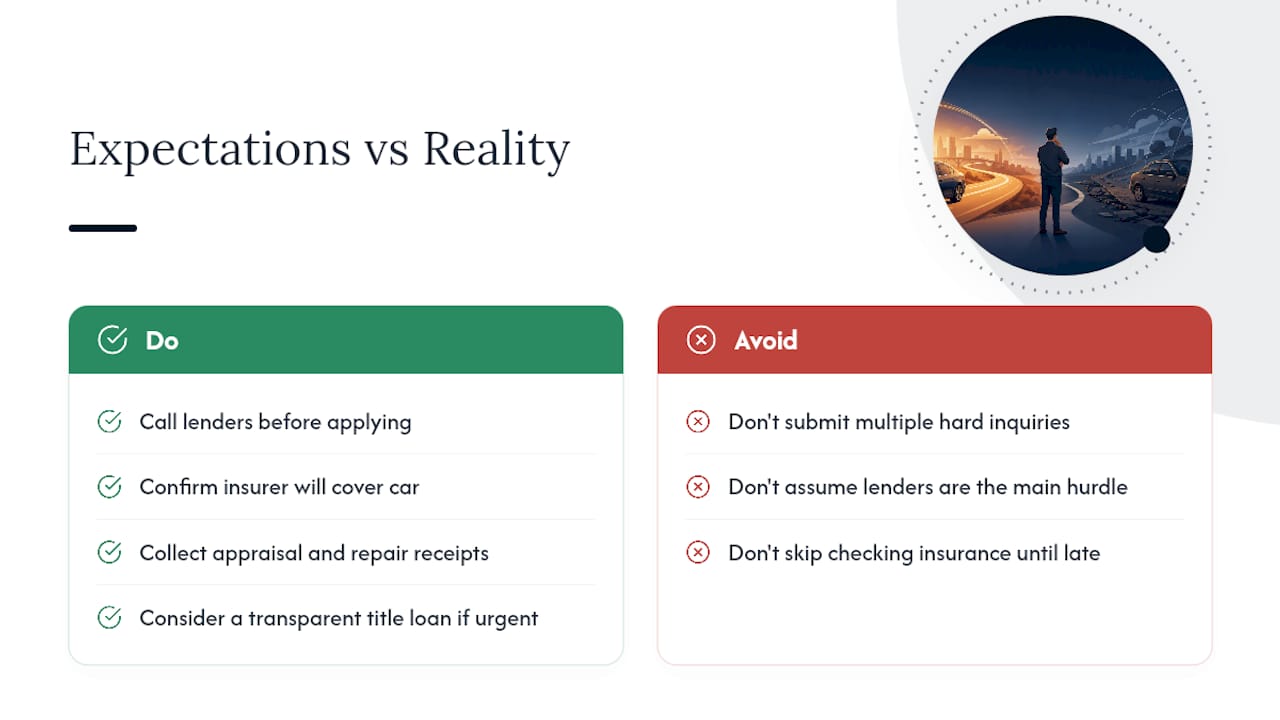
The conventional advice to “shop around at multiple lenders” also undersells how much a five-minute phone call can save you. A hard credit inquiry from an auto-decline lender costs you points for no reason, and doing that three or four times while you search for someone who’ll actually look at your file adds up fast. Calling ahead isn’t just polite. It’s the difference between a controlled search and a scattershot one that shows up on your credit report as a string of rejected applications.
Where I’d push back on common wisdom: title loans get treated as universally predatory in a lot of consumer content, and the CFPB’s repossession numbers back up real caution. But for someone who has already exhausted the credit union route, already knows their insurance situation, and needs cash in days rather than weeks, a transparent title loan with a written no-obligation offer and no pre-payment penalty is a materially different product than the worst version of that market. The risk is real. So is the fact that not every borrower has three weeks to wait on a credit union’s manual review.
— Constantine